Following winter storms that lashed California with rain and snow in recent weeks, the state is completely free of drought for the first time in 25 years, according to the U.S. Drought Monitor.
The last time California had no regions considered “abnormally dry” or in drought conditions was in December 2000.
The state’s drought-free status is welcome news for water managers, but residents in some regions are still recovering from a series of punishing atmospheric river storms that brought intense rain and flooding. Areas in higher elevations, meanwhile, have contended with heavy snow and risk of avalanches.
Over the course of about a week beginning Dec. 20, parts of Northern California received up to 7 inches of precipitation, while up to 4 inches fell in southern parts of the state. Then, as New Year’s Day approached, the state was hit once more with several rounds of heavy rain and flooding. Together, the events pushed California’s 17 major reservoirs to 129% of their average levels, according to state records.

The wet winter has boosted California’s snowpack, which is crucial to its water supply, though the snowpack is still lower than average. The California Department of Water Resources said at the end of December that readings from 130 monitoring stations throughout the Sierra Nevada indicated a statewide snow-water equivalent (a measure of the amount of water in the snowpack) of 6.5 inches, which is 71% of the average for this time of year.
Officials remain hopeful, however, given that California’s biggest snow producing months are typically January, February and March.
“It is still early in the season and our state’s water supply for this year will ultimately depend on a continued cadence of storms throughout winter and early spring,” Angelique Fabbiani-Leon, state hydrometerologist for the Department of Water Resources, said in a statement Dec. 30.
The Sierra Nevada snowpack usually supplies around 30% of California’s yearly water needs.
Unlike California, other parts of the West — including Nevada, Utah and Colorado — are grappling with persistent dry conditions and snow levels that are far below usual.
Snowpack in Utah is at record lows, with 93% of the state currently in drought conditions, according to the Utah Division of Water Resources.
In Washington, Oregon, Colorado, Arizona and New Mexico, more than 80% of monitoring stations are recording a “snow drought,” according to the National Oceanic and Atmospheric Administration’s National Integrated Drought Information System. The term refers to snow-water equivalent readings that fall below the 20th percentile.
This article was originally published on NBCNews.com
LATEST POSTS
- 1
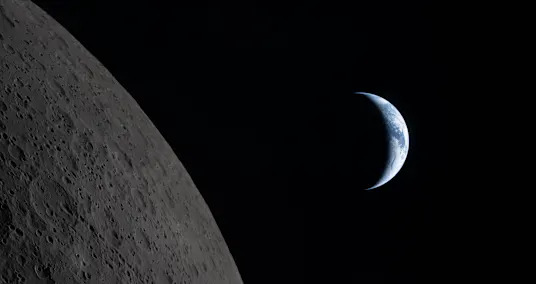
 NASA releases stunning new images captured by the Artemis II moon mission, including 'Earthset' and a solar eclipse from space
 - 2Giude to Best Web based Learning Stage
- 3Curl Up With Some Hot Chocolate And Watch Mighty Car Mods Explore Japan In A Honda City Turbo II
- 4Find the Lively Food Markets of South America
- 5Flu surges across U.S. as doctor visits reach highest level since 1997


- Instructions to Arrange Your Compensation During Medical caretaker Prospective employee meetings
- NASA to bring astronauts home from space station early due to a medical issue
- Most loved Specially prepared Espresso Mix: Which Meal Do You Adore the Most?
- Figure out How to Pick the Right Dental specialist for Your Dental Inserts
- Phonetic Associations: A Survey of \Interfacing Worldwide People group\ Language Trade Application
- The Force of Care: Living with Goal
- This professional Santa's dream of spreading holiday cheer fuels stroke recovery
- Brazil expands pesticide packaging reverse logistics
- RFK Jr.'s vaccine panel delays hepatitis B shot vote after chaotic meeting